Driving through on the main road gets a bit monotonous. Vegetation not particularly attractive eucalyptus, palm, occasional red-flowering turkey bush, and at least half of it recently burnt. (The annual early dry-season burning cycle to cut back the fuel load against more destructive bushfires with lightning strikes later in the year. Also helps regeneration of species that rely on fire and encourages new growth.) a bit further south some more attractive open savannah country with tall termite mounds. But you’ve got to know the good places away from the road (some can be accessed by 2wd) and it helps to have a good guide who can explain the rock art etc.
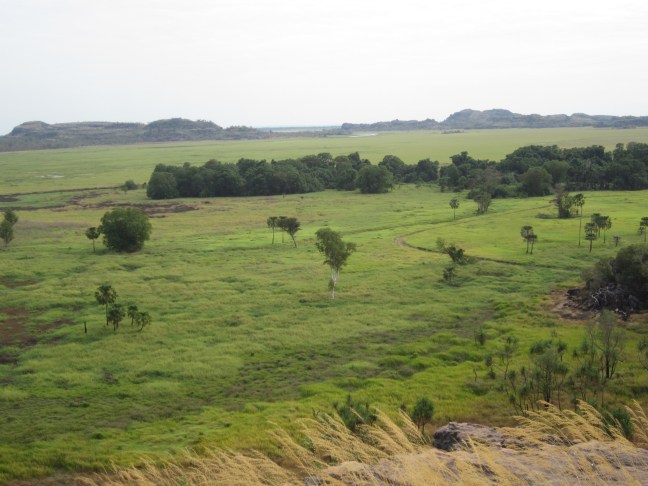
Ubirr in the NE of the tourist area was well worth the visit – good rock art and a climb to a high point with 360deg views over the wetlands that we hadn’t much seen earlier.
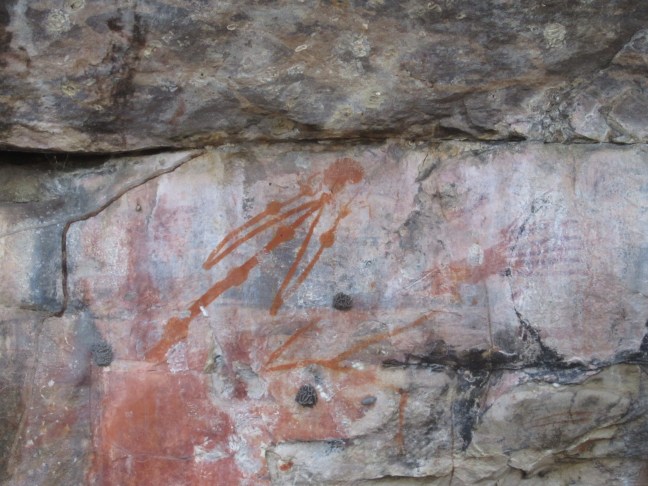
Hunting figure: game spear in left hand, fishing spear in right hand, various dilly-bags

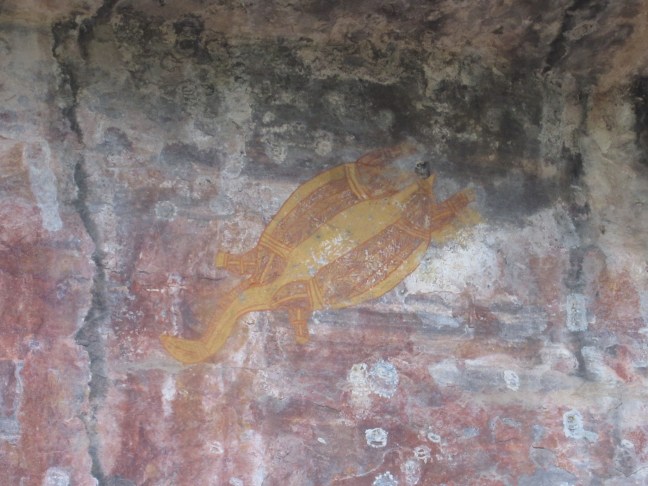
The white boss-man:
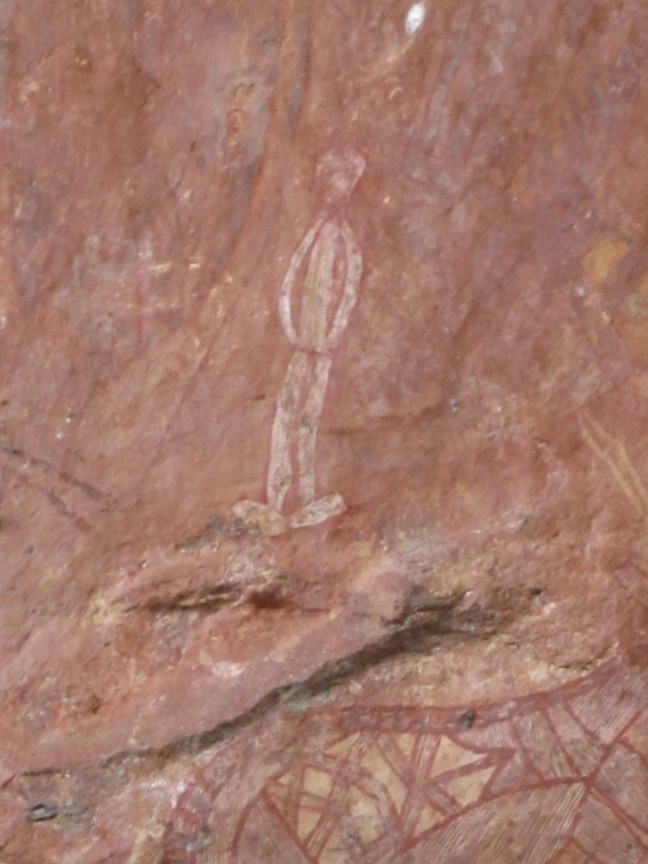
Over 4000 years ago there were Thylacine (Tasmanian tigers) here.

Near here, minerals leaching from the rocks caused swollen joints and sickness. Stay away from here:
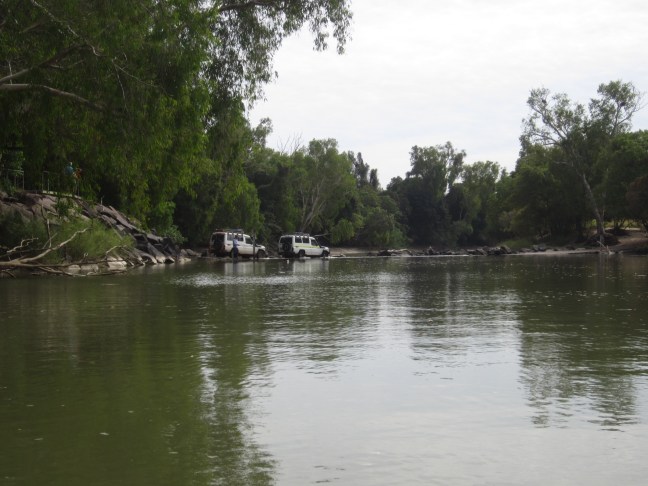
Then a cruise on the East Alligator River (which is still tidal here, over 50km from the coast) and which is the border from near here and out to the coast between the National Park and Arnhem Land. Need a permit to go over there. Our guide is from Gunbalanya 13 km over the ‘border’ where my friend Cat works as a doctor. I asked him to say hello to her. I wonder if he will? Lots more crocodiles and the only road crossing into Arnhem Land.
After lunch a quick drive out to peer though the fence at the Ranger uranium mine. Mining has ceased but they are still processing the huge stockpile. Still around 200 workers apparently. Jabiru is a company town. Got to work at the mine or in a service industry to live here or join the golf club etc.
Eventually we headed back to Darwin. Around 3 hours from Jabiru.
 travellingkathy