Cape Tribulation was the furtherest north I’d previously been in QLD. It was off the coast here that Captain Cook’s troubles started. Apparently it was one of his young midshipmen who knew about fothering (is that the right word?) a sail to plug the hole in the side of the ship. (Get a spare sail. Add all the possible dirty/sealing stuff you can find on board – fat, goat poo etc, line up the ship with the wind from behind, suspend the sail over the front (bow) hang on tight to either side of the sail, let the ship move forward until the sail is level with the hole, then pull tight! The pressure of the water will forced the sail into the hole and it becomes a plug, giving you half a chance of keeping going until you npcan find somewhere safe to beach the ship.
Meanwhile the little boats had been sent out to reconnoiter and had found the Endeavour River not all that far away. They limped in there, aimed for the shore at high tide possibly with some logs laid out as a roller-base, and managed to stay there when the tide went out. They were there for 48 days while the ship’s carpenter got out the ‘spares’ (timber etc) and repaired the ship.
Apparently this area was a neutral meeting place for the local indigenous clans and they didn’t get a lot of opposition. Some action of the crew caused concern but one of the senior Elders got with Cook at a place now called Reconciliation Rocks and calm was restored.
So we headed north to learn more about all this. The Bloomfield Track has a reputation. Certainly the creek/river crossings would put it out of action in the Wet, but the steep pinches I heard about were OK. The Track crosses the coastal range with several steep bits, but the main ones have been concreted – some with a sort of ribbing to give more grip.
The Lions Den Hotel for lunch. Made it onto the map I was using – it’s a Hema map of Cape York, with several insets. This day the scale was 1:250,000. All the detail we needed was there (provided the road wasn’t too bumpy and I had on the good glasses). A curiosity of the hotel is the tradition for writing on the walls. Started early on leave messages for people travelling that way, but now it’s just rubbish mainly. (I wonder if the writers take a photo of what they’ve written?) the toilets are in a separate building and have a sign “please do not write on these walls or doors or window frames. Go and do that on the hotel!
And so onto Cooktown. The settlement started as a port for the N QLD goldfields further west (Palmer River) in the 1870s. Flourished through the 1890s. Lots of Chinese miners – well organised groups.
With all this activity they needed a lighthouse to make shipping safer. The lighthouse preceded IKEA. Prefabricated in England and assembled on the top of the hill here that Cook used as a lookout to plan his exit. Grassy Hill. But no longer grassy.
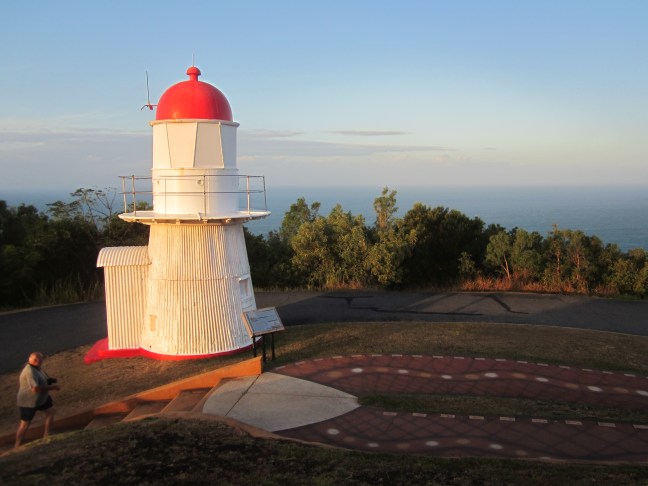
As I took the lighthouse photo there was a ship out there heading south but I can’t see it in the photo.
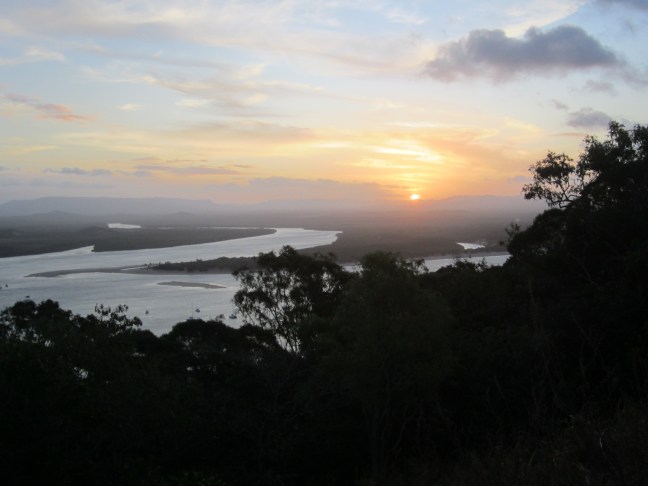
the next one was from a bit further down the hill looking up the Endeavour River.
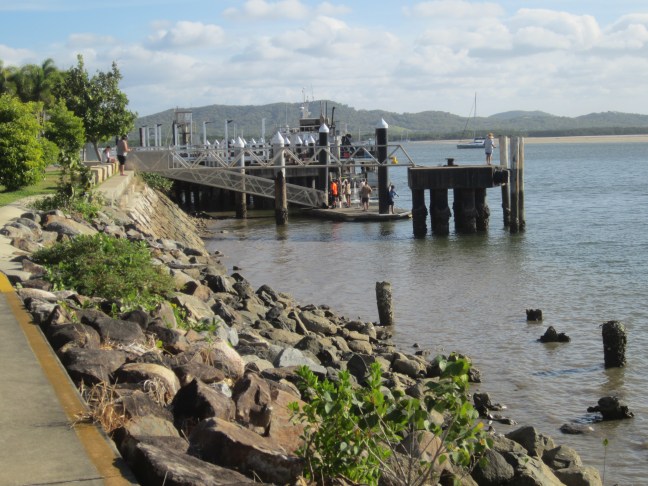
Cooktown is very proud of its heritage. Lots of signage in the Main Street (Charlotte St) with information and photos. Many more bigger buildings in 1890 than there are now. And down at the end of the old wharf area, is reference to the pilot station that was once here. (Sea pilots). I did a quick google search to see if I could find more but not so far successful. Ships no longer come in here.
but famously, the Britannia came in 1970 for the Cook bicentenary. They built a set of Concrete steps so the queen could alight from the lighter bringing her ashore. But it was low tide. The steps couldn’t be reached. They are still there in the middle of nowhere. Unused. But apparently the locals covered them in flowers when the queen died.
Ok now I’m having problems with photos. Thought I’d taken more but they seem to have disappeared. Never mind.
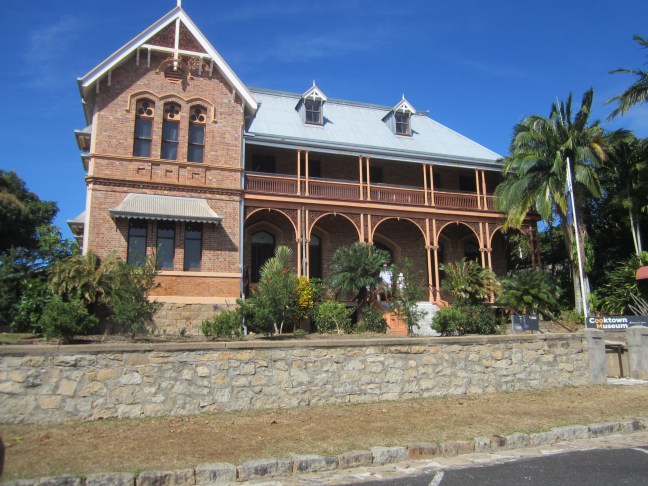
The queen was coming to open the new Cook Museum. Back around 1900, the Sisters of Mercy opened a convent and boarding school in the building above. They got evacuated to near Rockhampton in around 1942 and never returned. The building fell into disrepair but a museum was needed and the queen was coming. I think the story goes that Joh Bjelke-Peterson was premier at the time and government money was put into acquiring the building and they had 10 months to restore before the queen arrived. More recently an addition has been gently added to the back. An interesting museum and commemoration to the nuns.
the other evacuees were the aborigines from the Lutheran mission. The missionaries were German. Couldn’t have them indoctrinating the aborigines! They didn’t survive well in the cooler climes of Rockhampton. Joh B-P also had them brought back eventually – to Hope Vale, just north of Cooktown.
the second photo above is near to where the pilot station was.
lots of problems with this today. All that was Friday. Don’t know when I’ll get the time and energy to report on Saturday or (now) Sunday. See how I go. Now at a very pleasant camp near Musgrave owned by Outback Spirit with a largely rest day today.
 travellingkathy
Well you’ve now made it further north (in Australia) than me. We got as far as Bloomfield Falls. Have always wanted to see Cooktown, with such an interesting history. Didnt know Her Majesty had paid a visit.
LikeLike
What a lot of interesting info since you first set out! In true KL observant fashion. Glad things seem to be going well apart from the anti-Victorian bias! S@4350 (thought I should get a code of some sort).
LikeLike